
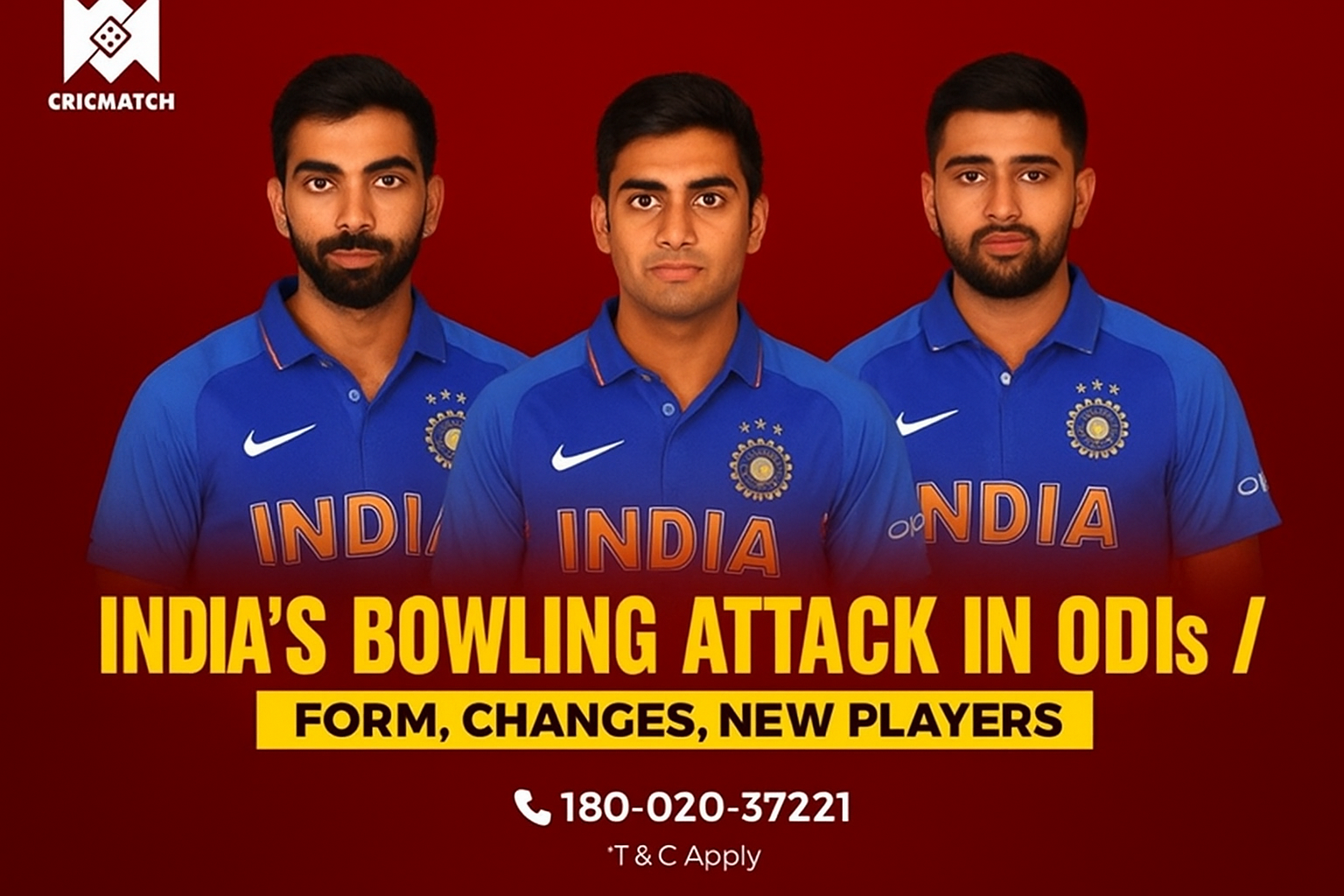
A strong bowling unit has become a cornerstone of India’s white-ball cricket identity. Over the past decade, the national team has moved from a spin-dominated strategy to building one of the most balanced pace and spin combinations in world cricket. With a busy calendar on the horizon, understanding the current form, recent changes, and the rise of new talents in India’s ODI and T20 attack is essential for fans and analysts alike.
1. Pace Attack: Consistency with Fresh Energy
Jasprit Bumrah remains the leader of India’s pace pack. His ability to bowl accurately in every phase of the innings makes him irreplaceable. But the narrative isn’t just about one superstar anymore.
- New-Ball Control: Mohammed Siraj has grown into a dependable new-ball option, capable of swinging the ball both ways. His ODI performances have given India early breakthroughs consistently.
- Left-Arm Variety: Arshdeep Singh brings a left-arm angle that adds tactical flexibility, especially in powerplays and death overs.
- Emerging Names: Young seamers from the domestic circuit have been steadily integrated, ensuring that India always has a deep pool of pacers to rotate without losing quality.
What makes this group different from the past is the clarity of roles — each bowler is trained and deployed for specific phases of the innings, rather than just operating in a standard rhythm.
2. Spin Department: Control Meets Innovation
India’s spinners have always been the backbone of its ODI and T20 strategy. The modern unit blends experience with match-up-based planning.
- Steady Hands: Ravindra Jadeja continues to play a dual role — offering control in the middle overs while contributing with the bat.
- Wicket-Taking Edge: Kuldeep Yadav has rediscovered his rhythm, providing much-needed breakthroughs against top opposition.
- Rotation Options: Depending on conditions, India has experimented with off-spinners, wrist-spinners, and part-time bowling options to create variety.
This tactical adaptability ensures that the team isn’t over-reliant on a single spinner, making it harder for opponents to plan counterattacks.
3. Key Tactical Shifts in White-Ball Bowling
India’s bowling strategy in ODIs and T20Is has seen subtle but impactful changes:
- Phase-Specific Execution: Powerplay, middle overs, and death overs are treated as distinct tactical phases.
- Match-Up Focus: Bowling combinations are selected based on opposition weaknesses, not just player availability.
- Variation Arsenal: Slower balls, cutters, wide yorkers, and angle changes have become standard parts of pacers’ toolkits.
This layered planning has helped India stay competitive on flat surfaces and in overseas conditions.
4. Integration of New Players
The most exciting development is the gradual introduction of fresh talent. With domestic tournaments and A tours serving as feeders, several young pacers and spinners have impressed selectors.
- Pace Bowlers: Quick bowlers with strong control have been used smartly in bilateral series to build experience.
- Spin Bowlers: Young wrist-spinners with attacking mindsets are getting exposure in T20Is, setting the stage for longer-term roles.
This ensures smooth transition cycles and a sustainable bench strength.
5. Addressing Key Challenges
Even with depth, India faces familiar white-ball bowling challenges:
- Death-Overs Consistency: Ensuring multiple bowlers can handle the final overs under pressure remains a key priority.
- Injury Management: High workload requires careful rotation to avoid burnout.
- Flat Track Adaptability: Maintaining wicket-taking ability in batting-friendly conditions is still a work in progress.
The current coaching setup has increasingly used workload data and match simulations to fine-tune these areas.
6. Looking Ahead
As India moves into a crucial stretch of bilateral and multi-team tournaments, its bowling attack will be expected to deliver across formats and conditions. The blend of experienced match-winners and confident newcomers gives the team more tactical options than ever before. How effectively they adapt phase by phase will determine how competitive India remains in high-stakes matches.
Final Thoughts
India’s ODI and T20 bowling unit is evolving from a spin-reliant attack into a multi-dimensional, phase-specific force. Consistent leaders, a strong pace core, innovative spin combinations, and the introduction of new talent make this an exciting period for fans.
For deeper tactical insights, match previews, and player performance updates, cricket followers can explore the Cricmatch Login portal. New users can also Cricmatch Signup to get exclusive content and analysis throughout India’s upcoming white-ball campaigns.